

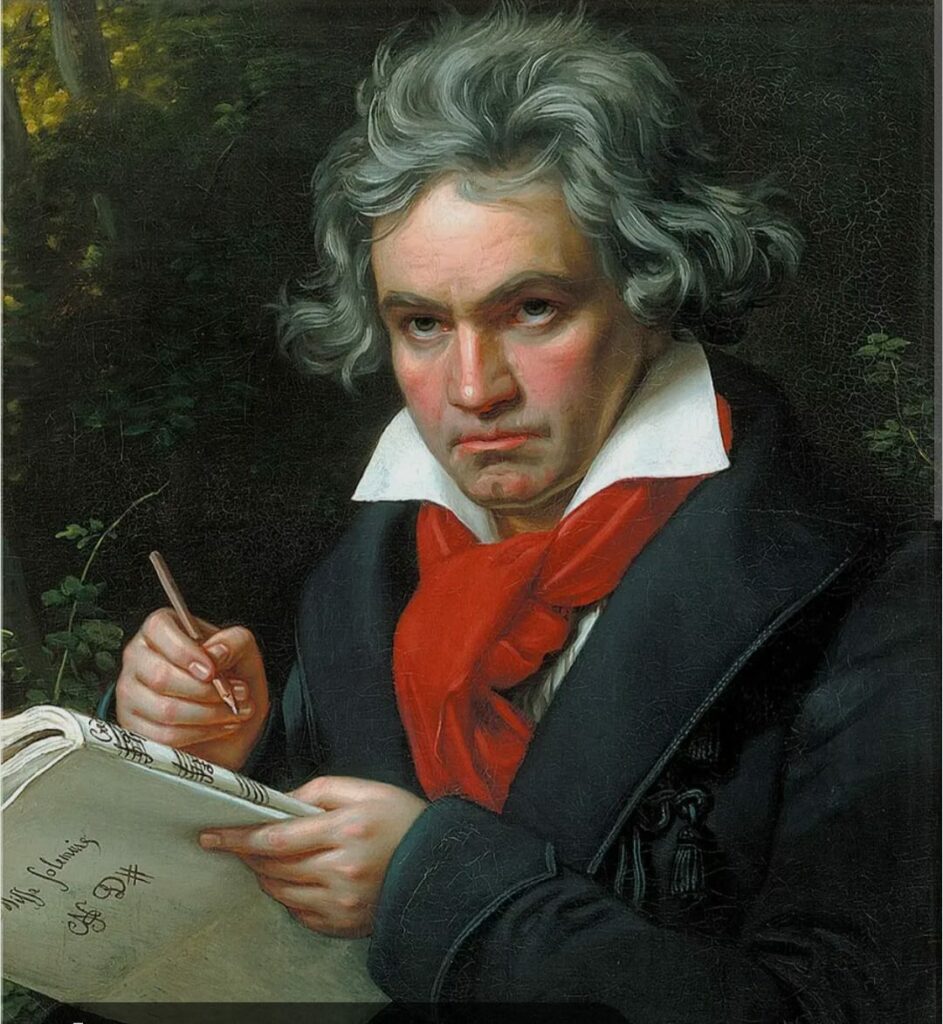
Ninth Symphony, Ludwig v. Beethoven
Premiered in 1824, Beethoven’s Ninth Symphony remains one of the most influential creations in the history of Western music. Monumental in scale, revolutionary in conception, and universal in its message, this work has become an artistic and humanistic symbol that continues to resonate two centuries later. The approaching bicentenary of Beethoven’s death in 2027, alongside the current state of the world, further reinforces the historical and emotional significance of this unique masterpiece.
Symphony No. 9 was groundbreaking in introducing, for the first time in a major symphony, four vocal soloists and a chorus in the final movement—a gesture that defied all conventions of the time and forever redefined the symphonic genre.
The celebrated “Ode to Joy,” inspired by Friedrich Schiller’s poem “An die Freude”, exalts ideals of freedom, fraternity, and unity among peoples—values deeply rooted in Enlightenment humanism. This universal message has made the final theme a symbol of hope which, given its profound symbolic weight, was adopted as the anthem of the European Union.
As someone observed, Beethoven expresses here “the will for freedom, the democratic longing of the people”— a hymn to hope, to human dignity, and to the transformative power of art.
The Ninth Symphony is more than a musical landmark: it is an artistic and human manifesto, a celebration of dignity and unity among all peoples—and a highlight of any Summer Music Festival.